
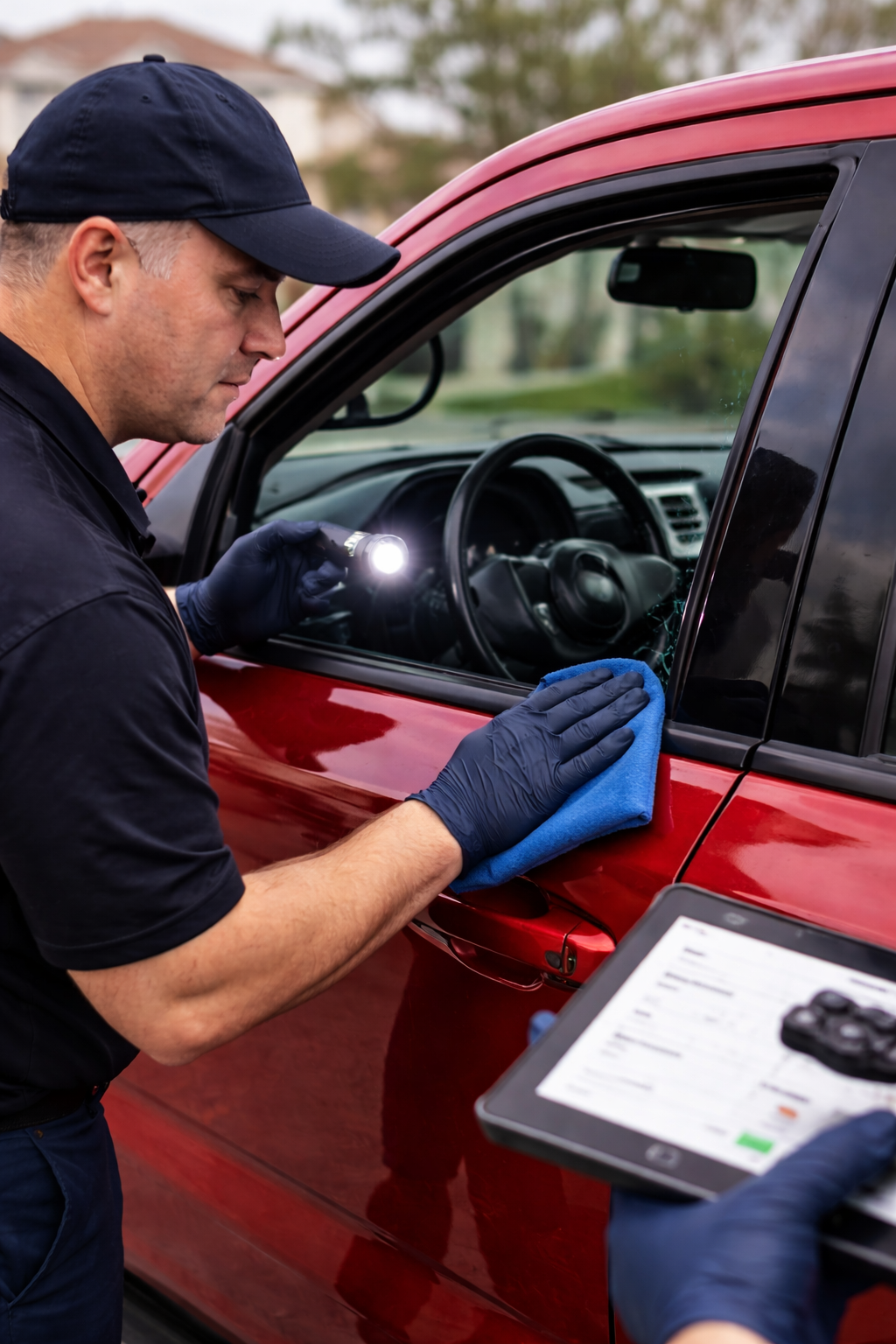
You just had a new windshield installed, waited the recommended hour, and drove through a car wash, only to find water dripping down your rearview mirror.
Your windshield leaked because Safe Drive-Away Time (SDAT) only means the adhesive can hold the glass during normal driving. It does not mean the glue has fully cured against high-pressure car wash jets.
Here is why high-pressure water breaks fresh seals, the danger of scratched metal frames underneath, and how to fix the problem permanently.
Why Did Your New Windshield Leak in the Car Wash?
Automotive windshield glue (polyurethane adhesive) takes 48 to 72 hours to cure into a solid, waterproof barrier. Taking your car through an automated or touchless car wash before that 72-hour window exposes soft glue to water jets that push past the fresh seal.
Windshield urethane is a moisture-curing adhesive. It uses humidity in the air to chemically harden from the outside inward at roughly 2 to 3 millimeters per day.
- The 1-Hour Mark: The outer skin sets. This holds the glass during normal driving, meeting federal safety standard FMVSS 212.
- The Inside Core: The center of the glue bead remains soft for up to three days.
Modern car washes blast water at 1,200 to 2,200 PSI. That concentrated force pushes past soft inner glue, creating permanent pinhole tunnels where water enters the cabin. During any mobile windshield replacement in Dallas, technicians always advise waiting at least three full days before visiting a car wash.
Windshield Cure Timeline: What Is Safe to Do?
| Curing Stage | Time Required | What You Can Safely Do | What Causes Leaks |
| Safe Drive-Away | 1 to 2 Hours | Normal street and highway driving | Car washes, slamming doors with windows closed |
| Rain Safe | 4 to 8 Hours | Driving in gentle, natural rainfall | Pressure washer wands, garden hose sprayers |
| Car Wash Safe | 48 to 72 Hours | Automated car washes, touchless spray bays | Harsh chemical degreasers within 24 hours |
The Door-Slam Air Pressure Spike
Shutting car doors with all windows rolled up also ruins fresh seals. Your cabin is airtight. Slamming a heavy door creates a sudden pressure burst. Because the urethane is still soft, that trapped air blows a hole outward through your wet seal.
What Is Pinchweld Prep, and Why Does Skipping It Cause Leaks and Rust?
The pinchweld is the metal channel around your vehicle’s frame where the windshield sits. If an installer scratches the paint off this metal lip and skips anti-rust primer, water will leak in and rust your frame from the inside out.
When removing old glass, technicians use sharp metal cold knives or cutout wire. Rushed installers often gouge factory paint down to bare steel.
According to the Auto Glass Safety Council AGRSS Standard, technicians must clean every scratch and apply a dedicated single-step pinchweld primer.
What Happens When Primer Is Skipped?
- Trapped Moisture: Rain and condensation settle into the outer glass molding.
- Corrosion Begins: Without primer, bare steel oxidizes into flaky rust.
- Bond Failure: Within 6 to 18 months, glue loses its grip on crumbling rust, opening channels for water.
A certified auto glass repair service in Dallas will always clean and coat every scratch with anti-corrosion primer before setting new glass.
What Are the 4 Signs Your Windshield Was Installed Incorrectly?
If your windshield was installed poorly or the seal was damaged before curing, look for these four warning signs:
1. High-Pitched Whistling at Highway Speeds (60+ MPH)
A whistling sound along highway corridors like I-35E, Dallas North Tollway, or US-75 means air is slipping through a gap in the glue bead. If air gets through, water follows.
2. Damp Headliners, Stained Pillars, or Wet Footwells
Gravity pulls leaking water along interior trim:
- Top leaks soak the fabric headliner above your sun visors.
- Side leaks run down plastic A-pillars.
- Bottom leaks run behind the dashboard and puddle in passenger carpet.
3. Wavy, Bumpy, or Gapped Glue Lines
Look closely at the black ceramic border around the edge of your glass. The adhesive line should be a smooth, continuous ribbon. Gaps, thinning spots, or bubbles mean a broken seal.
4. Dashboard Warning Lights and Electrical Shorts
Water leaking behind the dashboard drips onto your vehicle’s central computer—the Body Control Module (BCM)—or fuse block. This triggers flickering dash lights, malfunctioning power windows, dead batteries, and starting issues.
If you notice any of these warning signs, schedule a Dallas auto glass repair and windshield replacement inspection before moisture damages your electronics.
Can You Fix a Leaking Windshield by Patching It with Silicone?
No. Squirting clear household silicone along outer rubber molding will not fix a leak. Silicone does not chemically bond to automotive polyurethane; water crawls beneath the patch and accelerates rust against the metal frame.
The Structural Safety Risk
Your windshield is a major structural safety device:
- Airbag Deployment: The passenger airbag inflates upward, bouncing off the windshield to cushion occupants. An improperly bonded windshield can pop out during a crash.
- Roof Crush Resistance: In a rollover, the windshield provides up to 45% of cabin roof strength, preventing roof collapse.
The only permanent fix is removing the glass, cleaning and re-priming the pinchweld frame, and reinstalling the glass with a continuous factory-grade urethane bead.
The same factory bonding standards apply whether replacing a front windshield, completing a rear windshield replacement in Dallas, or booking side window replacement services in Dallas—proper adhesive application is the only way to prevent leaks and highway wind noise.
How Should You Care for Your New Windshield During the First 48 Hours?
Protect your fresh seal while the urethane cures with these four care rules:
- Leave Retention Tape on for 24 Hours: This tape holds the glass in alignment so it does not slip while glue sets.
- Crack One Side Window by 1 Inch: Letting air escape when closing doors prevents cabin pressure bursts from popping the wet seal.
- Avoid Automated Car Washes for 72 Hours: Keep drive-through washes and high-pressure spray wands away for 3 days. Hand-wash gently with a bucket after 48 hours if necessary, avoiding direct water on glass edges.
- Park on Level Ground: Parking with wheels on a curb twists the car chassis, placing uneven stress on curing adhesive.
Whether you are getting broken car window repair services in Dallas or a full windshield replacement, following basic post-care steps protects your investment. These same leak-prevention rules apply to daily commuters as well as specialized vintage car windshield replacement in Dallas.
Get Reliable, Leak-Free Auto Glass in Dallas
A leaking windshield threatens your vehicle’s structural safety and interior electronics. If your new glass leaks, whistles, or shows signs of poor installation, let our certified technicians inspect and correct the problem.
- Shop Location: 1035 S Mill St, Lewisville, TX 75057
- Mobile Service: Dispatched across Dallas, Plano, Frisco, and McKinney
- Direct Dispatch Phone: 469-859-6166
Contact Eddy’s Auto Glass Services today to schedule your guaranteed mobile inspection or glass replacement.
FAQs
How long after windshield replacement can I take my car through a car wash?
Wait at least 72 hours (3 full days). While your car is safe to drive in 1 to 2 hours, the adhesive needs up to 3 days to fully harden against high-pressure water jets (1,200+ PSI).
Why is water dripping from my headliner after a glass replacement?
Water dripping from the headliner or rear view mirror indicates a gap, bubble, or thin section in the top glue bead, or that the glass shifted before setting.
Can an auto glass shop fix a leak without removing the glass?
No. Squirting silicone from the outside fails to create a lasting seal and traps moisture against your frame. Proper repair requires removing the glass, fixing the metal frame, and resealing with fresh urethane.
What happens if an installer scratches the paint under my windshield?
Unprimed metal scratches rust from moisture exposure. Over time, rust breaks the glue’s bond to the car body, causing water leaks and reducing roof strength.
Why does my new windshield make a whistling sound on the highway?
A whistling sound at speeds over 60 MPH means air is slipping through a tiny hole in the urethane seal. If air can pass through, water will soon follow.
Can a leaking windshield damage my car’s electronics?
Yes. Leaking water runs behind the dashboard into the Body Control Module (BCM) or fuse box, causing short circuits, dead batteries, and electrical failures.